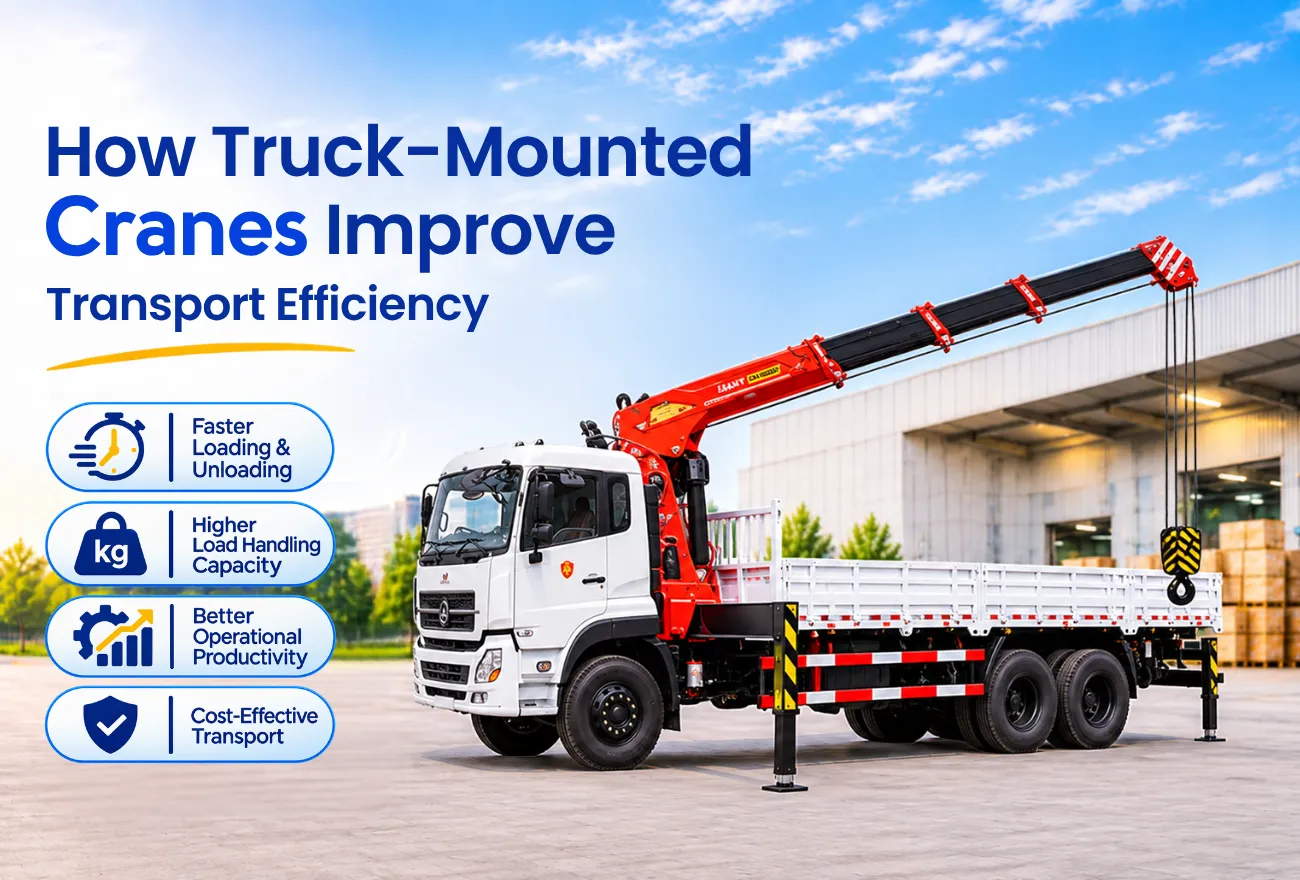
Moving goods is only half the job. Loading, unloading and handling heavy materials can make or break a delivery schedule, and they affect labour costs and productivity along the way. Modern truck-mounted cranes let a suitably equipped truck lift, carry and position heavy loads without always needing separate lifting machinery.
For businesses in construction, logistics, manufacturing and infrastructure, that means smoother material handling and more flexibility across different worksites.
What Are Truck-Mounted Cranes?
A truck-mounted crane is a hydraulic lifting system fitted directly to a commercial vehicle. It handles loading and unloading, so the truck can both transport and lift.
That's the key difference from a conventional mobile crane, which is built mainly for lifting. Many truck-mounted models use an articulated or knuckle-boom design that folds away compactly when not in use. Depending on capacity and configuration, they can handle construction materials, industrial equipment, machinery and other heavy or awkward loads.
Faster Loading and Unloading
The biggest advantage is simpler loading and unloading.
Traditional deliveries often need a forklift, mobile crane or other lifting equipment at both ends. Coordinating that gear causes delays, especially when machinery isn't available, or several deliveries are booked at once.
A truck with a suitable loading crane can handle many of these lifts on its own, as long as site conditions and the load allow it. A building supplier delivering pallets, pipes or structural components, for example, may be able to unload straight off the truck.
Exact time savings depend on the load, crane capacity, site access and operating conditions. But needing less additional equipment generally means less waiting and easier coordination.
Flexibility Across Different Worksites
Transport businesses work across sites with very different access conditions. Some have unloading equipment on hand. Others have tight space and no machinery at all.
Because one vehicle can both carry and lift, a truck-mounted crane copes with both. Articulated cranes are especially handy for placing loads around obstacles or in restricted areas. Every lift still needs to stay within the crane's rated capacity, working radius and stability limits.
This flexibility suits businesses handling:
- Construction material deliveries
- Industrial equipment transport
- Agricultural machinery
- Infrastructure maintenance
- Building supply distribution
- General freight and specialised logistics
With less reliance on fixed unloading facilities, you may be able to serve a wider range of delivery locations.
Less Dependence on Extra Equipment
Hiring or coordinating separate lifting machinery adds complexity. You need to confirm equipment availability, schedule operators, and organise multiple vehicles at the same site.
For suitable lifts, a truck fitted with an appropriately rated crane can collect, transport and unload materials by itself. That simplifies planning and can reduce equipment costs.
It won't replace everything, though. Larger or more complex lifts may still need a dedicated mobile crane, specialised rigging or extra personnel. The most efficient setup depends on what your operation actually needs.
Safer Material Handling
Heavy materials bring real hazards, including falling loads, unstable equipment and manual handling injuries.
Truck-mounted cranes reduce how much heavy or awkward lifting workers have to do by hand. When operated correctly, hydraulic systems raise and position loads in a controlled way, and many modern cranes add safety features such as load monitoring, stability systems, and remote-control operation.
These features support the operator, but they don't remove the risk. Safe lifting still depends on competent personnel, suitable lifting accessories, sound ground conditions and following the manufacturer's operating instructions. Employers also need to make sure operators hold the required training and licences.
Choosing the Right Crane Capacity
Cranes aren't one-size-fits-all. When choosing, consider the weight of your typical loads, the lifting distance you need and the capacity of your vehicle.
- Smaller cranes suit general deliveries and lighter material handling.
- Medium-capacity cranes add lifting power for construction, transport and industrial work.
- Larger models may be needed for demanding equipment handling.
Load weight alone doesn't tell the full story. A crane's lifting ability changes with the distance between the crane and the load, known as the working radius. Vehicle stability, outrigger setup and ground conditions matter too. Before buying, review your typical lifts and talk to a suitably qualified equipment specialist.
Vehicle Weight and Payload
A crane adds weight to the truck, so design and installation matter. A crane that's too heavy cuts into your payload, which can limit how much you carry while staying within legal weight limits.
Compact designs with a good lifting-capacity-to-weight ratio help balance lifting performance with transport needs. Overall suitability also depends on chassis capacity, axle loads, mounting arrangements and load distribution. Getting the match right keeps your operation flexible without giving up unnecessary payload.
Better Delivery Planning and Productivity
Reliable schedules matter in a competitive transport market. Delays at loading and unloading flow into later deliveries, vehicle availability, and customer satisfaction.
A truck-mounted crane gives operators more control over suitable lifts. Instead of arranging lifting equipment at every destination, you can plan around what the truck can already do. That's particularly useful on multi-stop routes, such as a building supplier delivering to several construction sites in one day.
Actual gains depend on practical factors like site preparation, operator competence and how complex each lift is.
Maintenance and Long-Term Reliability
Like any hydraulic equipment, truck-mounted cranes need regular maintenance. Inspect hydraulic components, lifting mechanisms, structural connections, and safety systems in line with the manufacturer's recommendations.
Routine checks typically cover hydraulic hoses, mechanical components, safety functions and signs of wear. Pay close attention to outriggers and stabilisers, because they're critical to stability during lifting. Neglecting them creates serious safety risks.
Set up a preventative maintenance schedule and keep accurate service records. Catching problems early means fewer unexpected breakdowns and more consistent equipment availability.
Selecting a Truck-Mounted Crane for Your Business
Start by looking closely at your transport and material-handling needs. Key considerations include:
- Typical load weight
- Required lifting radius
- Vehicle type
- Operating environment
- How often you'll use it
Also check the availability of replacement parts, technical support and servicing. If you work across multiple locations, reliable maintenance support is especially valuable.
Purchase price matters, but the total cost of ownership matters more. Factor in maintenance, payload, operational efficiency and how well the equipment suits your work. The right configuration supports your business without adding unnecessary running costs.
Making Transport Operations More Efficient
Truck-mounted cranes combine lifting and transport in one vehicle, which gives real advantages to businesses that regularly move heavy or awkward materials. They simplify loading and unloading, reduce reliance on extra equipment and add flexibility across worksites.
To get those benefits, you need the right equipment, trained operators and consistent maintenance. For construction suppliers, logistics providers and industrial transport companies, a well-chosen crane is a practical way to lift productivity while keeping material handling safe and reliable.