Every city runs two economies side by side: the one people see in shops and offices, and the one that keeps those shelves stocked. The second runs largely on small cargo vehicles, and in most Indian towns and cities the most common of these is the three-wheeled goods carrier, known almost everywhere as the tempo. As delivery volumes grow and businesses look harder at their costs, this familiar vehicle is quietly being reinvented.
Why last-mile cargo in India still runs on the three wheeler tempo
The 3 wheeler tempo has survived every change in Indian logistics because it does one job extremely well: it moves a few hundred kilos of goods over short distances, through narrow streets, at a low cost per trip. It reaches kirana stores in crowded markets, delivers water cans to residential lanes, carries vegetables from wholesale mandis and takes parcels from e-commerce hubs to neighbourhoods that a larger truck could not enter.
Its strengths are its size and its simplicity. A tempo can turn in tight spaces, park where a four-wheeler cannot and be run by a single driver who often owns the vehicle. For small businesses, it is frequently the first commercial vehicle they buy, and for delivery operators, it is the backbone of the final kilometre.
What has changed is the pressure on the economics. E-commerce and quick commerce have raised the number of daily drops, customers expect faster delivery windows and fuel costs keep rising. A tempo now has to complete more trips per day, at a lower cost per trip, with less time off the road.
Choosing a cargo tempo: payload, body type, range and running cost
The right three wheeler tempo depends on what it will carry. Payload is the first filter, because overloading a smaller vehicle shortens its life and makes it harder to handle, while buying more capacity than the business needs adds cost to every trip. Body type matters as much as capacity. An open pickup tray suits bulky or loose goods such as construction material, vegetables and crates, while a closed container protects parcels, pharmaceuticals and high-value items from rain, dust and theft.
Range and charging, or refuelling, decide how many trips fit into a day. Last-mile delivery involves frequent stops and restarts, which hurt fuel economy in conventional vehicles but suit electric drivetrains well. For operators with depot parking, overnight charging means the vehicle starts each day full without any time lost at a fuel station.
Running cost and durability complete the decision. Fuel and maintenance make up most of the cost of operating a tempo, so a lower cost per kilometre pays back over the vehicle's working life. Build quality, suspension and gradeability matter too, because tempos often work on rough roads, ramps and flyovers with a full load.
Electric cargo tempo options, including the Montra Electric Super Cargo
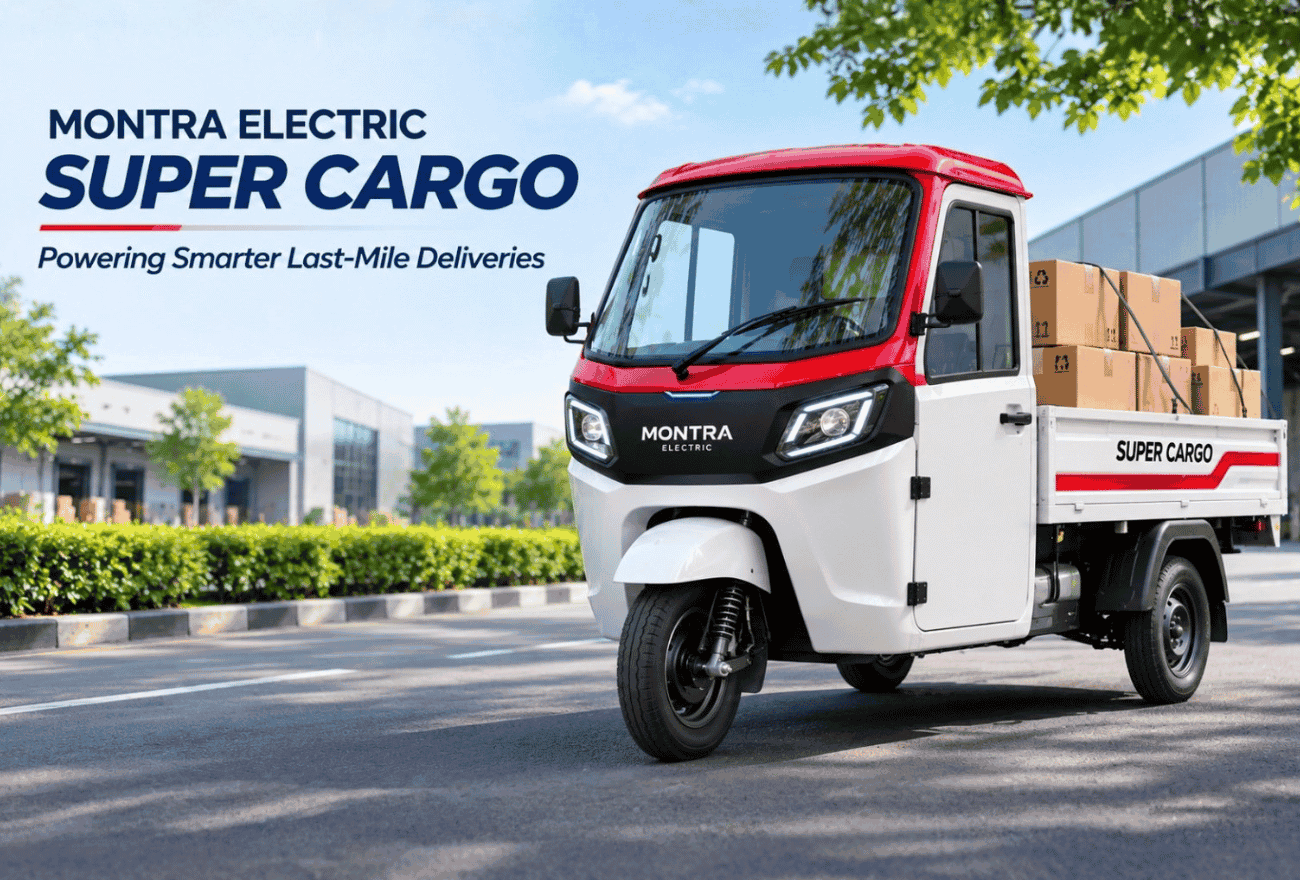
Montra Electric's Super Cargo is a good example of what an electric cargo three-wheeler offers today. It comes in two body styles: the eCX, with a 6.2-foot open pickup tray and a rated payload of 575 kg, and the eCX d+, with a 170 cubic foot metal container and a payload of 510 kg. Both are built on a 1.2-tonne GVW platform, which Montra Electric says is the highest in the category, with 23 percent gradeability for loaded climbs.
The Super Cargo offers an on-road true range of 150+ km on a single charge, against a certified range of 200+ km, and a full charge takes around 4 hours 45 minutes on a standard electrical supply. For operators who cannot wait that long, the quick-charging eQX version charges fully in 15 minutes and gives 120 km of true range per charge. A top speed of 45 km/h suits city delivery work.
Running costs are where the case is strongest. Montra Electric compares the Rs 500 to 700 a CNG cargo vehicle typically spends on fuel each day with Rs 30 to 40 of electricity for the equivalent range, and says maintenance costs are up to 60 percent lower than for CNG cargo vehicles. The Super Cargo range starts at an ex-showroom price of Rs 4,60,000*.
The vehicle is built for daily commercial work, with a boron steel chassis, a solid metal load body, leaf spring rear suspension and double leading hydraulic front suspension. IP67 protection, a digital LCD instrument cluster, drive modes and a driver's seat belt, which Montra Electric describes as a first in the category, round off the package. The battery carries a standard warranty of 5 years or 1.75 lakh km, with an optional extended warranty of up to 6 years or 2.25 lakh km, backed by AMC plans and roadside assistance.
The tempo will remain at the heart of last-mile cargo in India for a long time. What is changing is what powers it. For businesses that run predictable routes, return to a depot each evening and watch their cost per delivery closely, an electric three-wheeler tempo increasingly offers a simpler and cheaper way to move the same goods.
Frequently asked questions
What payload can an electric 3 wheeler tempo carry?
It depends on the model and body type. The Montra Electric Super Cargo eCX, for example, is rated for 575 kg on an open pickup tray, while the container version, the eCX d+, carries 510 kg.
How long does an electric cargo three wheeler take to charge?
The Montra Electric Super Cargo takes around 4 hours 45 minutes to charge fully on a standard electrical supply. The quick-charging eQX version charges fully in 15 minutes and gives 120 km of true range per charge.
Should I choose an open deck or a container body?
An open deck suits bulky or loose goods such as construction material, vegetables and crates. A closed container is better for parcels, pharmaceuticals and high-value cargo that needs protection from weather and theft.
*Ex-showroom price, as listed by Montra Electric. Prices may vary by city and variant.